
Bee Slough Vertical Flow Treatment Wetland
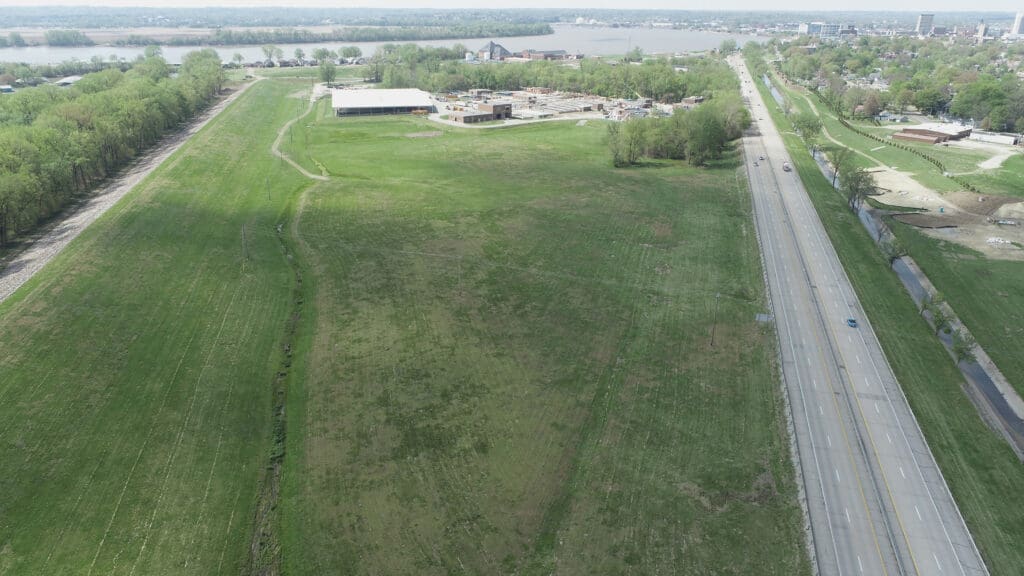
The Bee Slough Vertical Flow Treatment Wetland is being developed to address Evansville’s critical need to manage combined sewer overflows (CSOs) and reduce untreated discharges into the Ohio River. This innovative solution will significantly lower energy consumption and carbon emissions compared to traditional treatment methods, while delivering long-term environmental, social, and financial benefits to the community. We are providing preliminary design engineering services for what will become the world’s largest vertical flow wetland, having been engaged in 2019 to enhance the city’s Advanced Facility Planning report and propose a sustainable, nature-based alternative to conventional infrastructure.
Key Contributions:
Innovative Engineering Design
We proposed the vertical flow wetland concept as a modified storage and treatment solution to address CSO challenges, positioning it as a sustainable alternative to conventional treatment plants.
Environmental Impact Reduction
We designed the system to reduce energy use and carbon footprint compared to traditional processes, helping the city meet environmental goals while improving water quality.
Scalable Treatment Capacity
We engineered the wetland to treat an average of 45.9 million gallons/day and up to 100 million gallons/day during peak flow, ensuring long-term resilience and scalability.
Triple-Bottom-Line Analysis
We conducted a comprehensive analysis to maximize financial, social, and environmental value—highlighting benefits such as reduced excavation, odor control through native plantings, and environmentally friendly UV disinfection.
Community Integration
We helped shape the wetland as a gateway park for Evansville, incorporating trails, birdwatching hides, and outdoor classrooms to foster public engagement and environmental education.
Project Location
Evansville, Indiana
Client
Greeley and Hansen, LLC & City of Evansville