
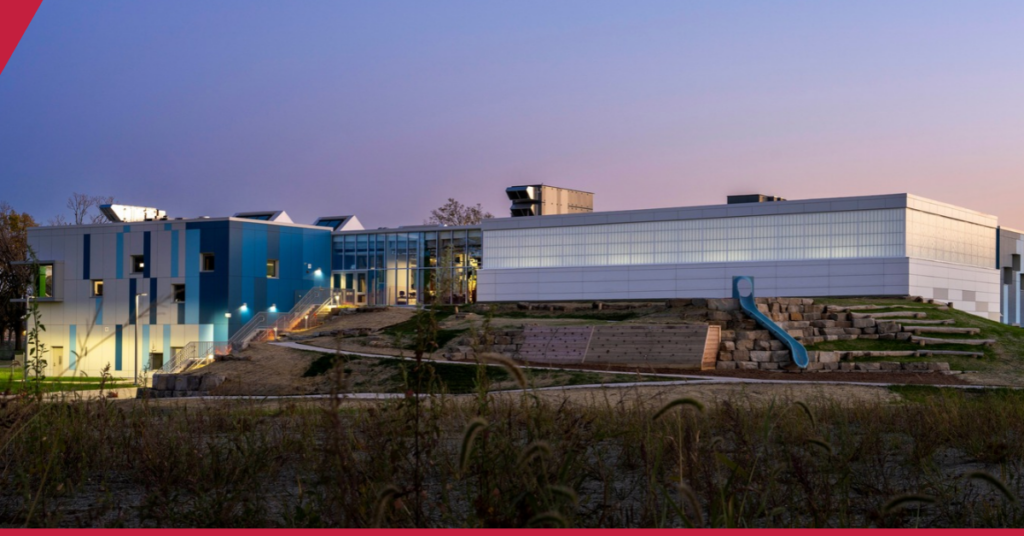
It’s one thing to pursue sustainability; it’s another to prove it. The Living Building Challenge pushes us as humans and developers to the highest level of sustainability and our team crossed that finish line with the Academy for Global Citizenship: the first school in the world to be Living Building Certified. Learn more about this ambitious designation and how this Chicago elementary school is inspiring the next generation to protect our planet.
What is the Living Building Challenge?
The Living Building Challenge is the world’s highest environmental certification standard, proving that people can live in balance with ecosystems and each other. It requires projects to “give more than they take” and become not only self-sufficient but regenerative. Projects must create their own power and supply their own water, but the requirements don’t stop at resource usage: designers and engineers must actively use the building to connect people to nature and create a healthy environment.
The Challenge is organized into seven performance areas (referred to as Petals):
- Place: Encouraging conscientious connections with nature.
- Water: Achieving a net-zero water balance and minimizing waste.
- Energy: Relying solely on self-generated, renewable power.
- Health & Happiness: Supporting good physical and mental health.
- Materials: Sourcing local, non-toxic products.
- Equity: Creating spaces that work for all.
- Beauty: Designing inspiring spaces.
Buildings can pursue individual Petal certifications but must meet the requirements for all seven to achieve Living Building Certification.
How does the Living Building Challenge work?
Creating a Living Building goes beyond good stewardship. It requires advocacy to push conventional boundaries, innovation in design, and deliver proof that it works.
Finished projects have one year to collect energy data monitor water supply and demand, documenting everything down to the last drop. This data is monitored by third-party commissioning agencies and ultimately reviewed by the International Living Futures Institute. Once it’s clear the building is on average a self-sufficient site, the project joins the most elite class of sustainability.
But even the most thorough, well-conceived plans can derail from unforeseen circumstances. Prolonged periods of drought, overcast skies, or other climate complications can negatively impact water collection and energy generation, causing deficits. The unpredictability of natural elements is what makes this certification so difficult to achieve.

“You plan, and plan, and plan, but you just never really know. The final result is so dependent on so many different factors that at the end all you can do is hope you achieve what you set out to do.”
David Marks, P.E., Project Manager
How did the Academy for Global Citizenship become the first Living Building Certified school in the world?
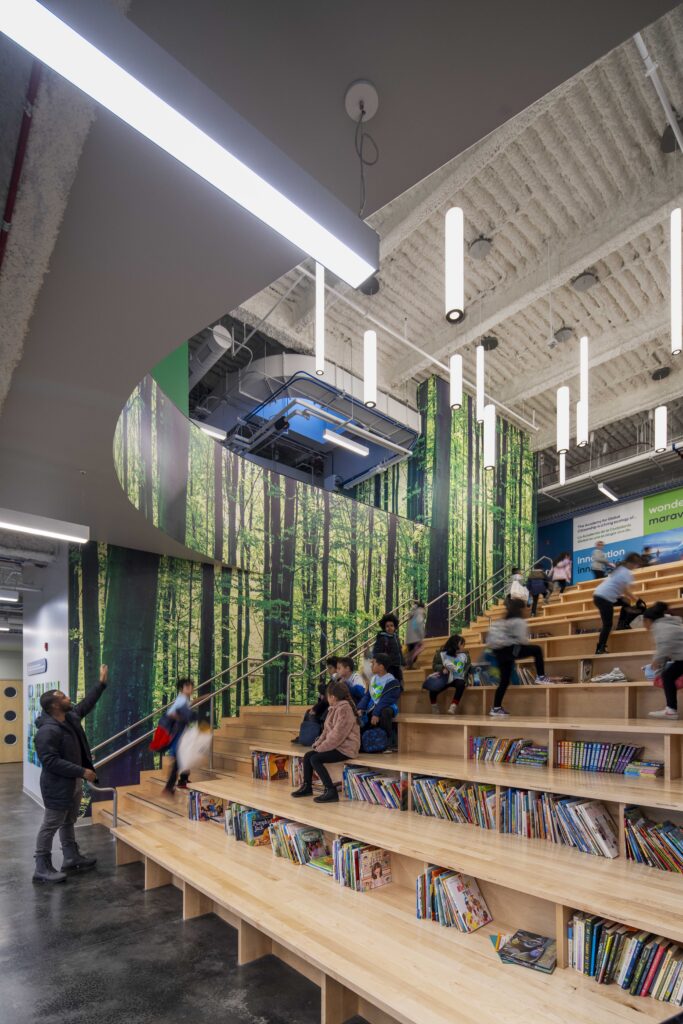
The Academy of Global Citizenship (AGC) was founded on the mission that all students can positively impact their communities and the world beyond. Wellness, social justice, and environmental education are core parts of their curriculum, but in order to become a beacon of stewardship, the school building and campus itself had to reflect that goal.
What started as a brownfield on Chicago’s south side transformed into a groundbreaking education campus powered by net-positive energy and water systems. AGC hired our team for comprehensive site civil engineering, water resource, environmental, and sustainability services for this unique project.
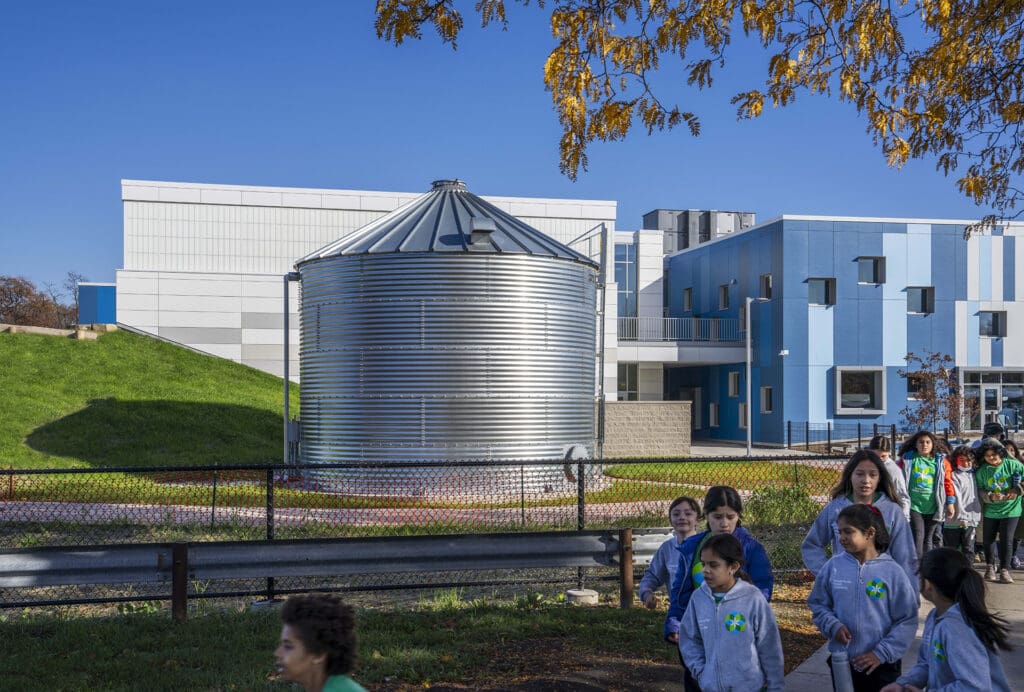
Completing the Water Petal requirements was one of the hardest engineering challenges due to water’s finite nature. Our experts designed an innovative system that minimizes wasteful water practices and collects, stores, and treats rainwater to supply the demand, saving over one million gallons a year. To keep these efforts top of mind, the school showcases how their water is collected and reused in real-time via a visual water display and an outdoor “water trail” for student engagement. This led to a 2025 ACEC IL Engineering Excellence Honors Award in Waste & Storm Water.
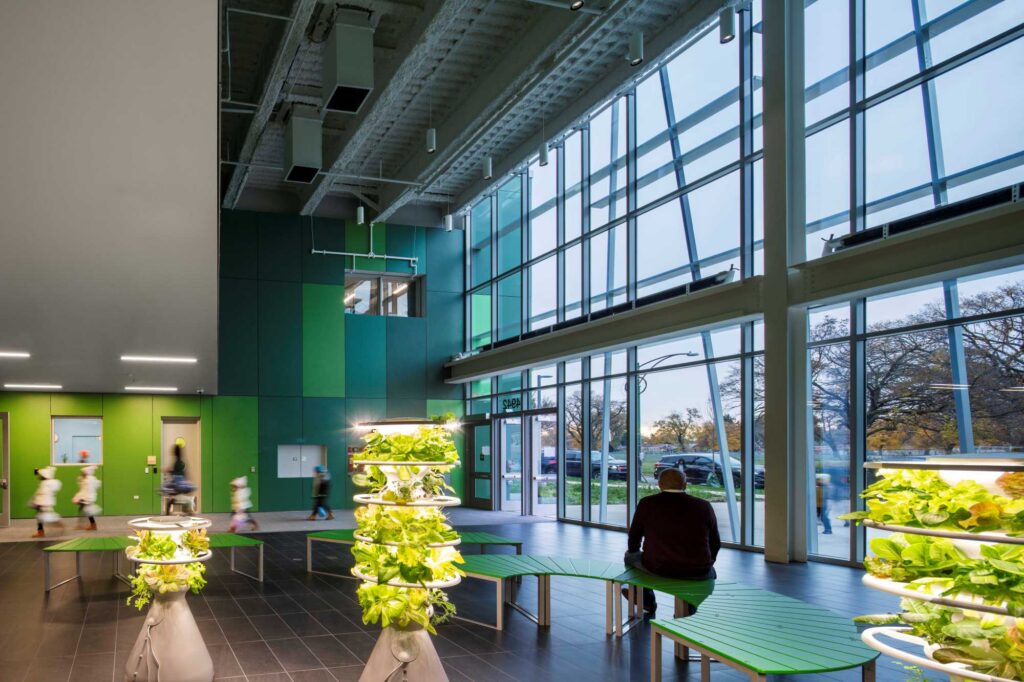
Achieving other Petal considerations such as ensuring good air quality, avoiding building materials with cancer-causing chemicals, and establishing an urban farm prove that despite the challenge, creating a Living Building Certified school can be done. The Academy for Global Citizenship now generates 105% of its own energy and continually draws visitors from all over the world hoping to shadow teachers, learn curriculum, and replicate their success.
“People said you can’t build an ultra-sustainable school. It’s too expensive; the model doesn’t work. But in the case of AGC, they built into their culture, teaching young kids to be conscious of energy usage in their daily lives. A project like this is challenging, but when you have a strong team of advocates sticking together to see the effort through, you can accomplish something with a greater purpose.”

Connect with our team to learn more.
Photo Credits:
Cultivate Collective
Academy for Global Citizenship
URBAN ReSOLVE (Development Advisor)
SMNGA (Architect of Record)
Farr Associates (Assoc. Architect)
Tom Rossiter Photography (Photography)