

Most golfers aren’t thinking about stormwater management when trying to sink a putt, but ineffective infrastructure is worse than a triple bogey. Learn how our water engineers cleverly integrate golf course design features with functional water solutions that both improve the golf experience and surrounding environment.
A renaissance of golden-age golf course design
The United States and golf industry as a whole are moving back toward original course design. When golfers took their first swings in 15th century Scotland, courses were built into their natural surroundings, with holes weaving around hillsides and grassy knolls. Without bulldozers to push dirt around, players simply enjoyed the game within the context of their environment.
Today’s courses are known for their pristine greens, but that wasn’t always the case. Lush, sprawling courses only became the norm after the first televised golf tournament in color: 1966’s Masters in Augusta, Georgia. Viewers were astounded by the vivid green landscapes, causing course owners to quickly copy the style.
But that aesthetic appeal comes with a price. Not only does it take an incredible amount of water to keep grass green, but the cost of mowing and maintaining sprawling courses is exponential. Course owners are exploring more sustainable upkeep options, reverting to more natural designs that involve grading changes, tree removal, and integrated stormwater management.
Efficient, integrated golf course water systems
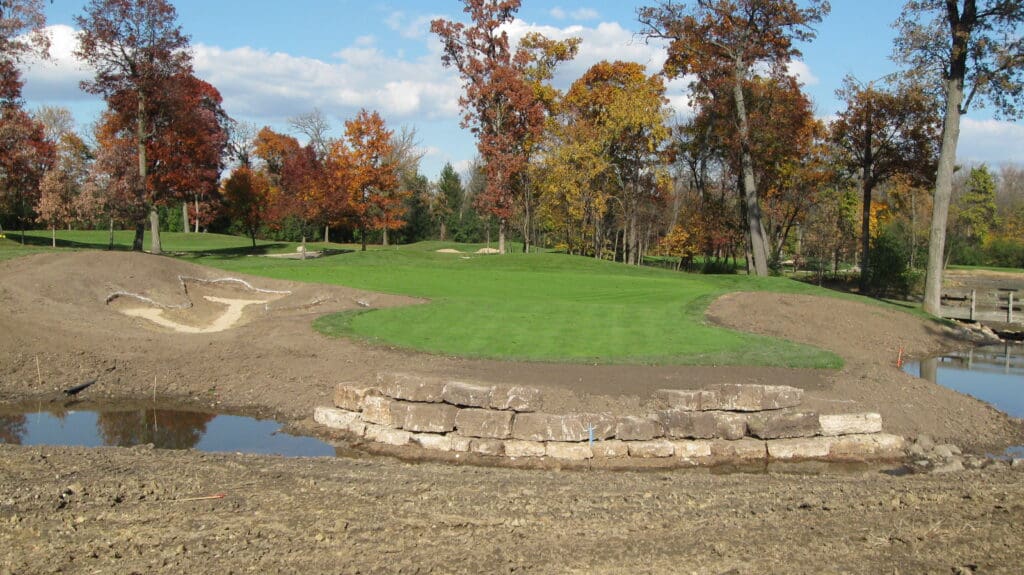
Creating an organic, environmental look is not without its challenges. Golf courses adopting a more classic design still need to prevent greens from flooding. Building a berm or culvert is more straightforward than integrating necessary infrastructure with natural surroundings; finding those solutions takes close collaboration between course architects and water engineers.
As course designs take shape, engineers build detailed water models to understand how water will move throughout the new elements. If it appears that certain design choices may cause flooding or irrigation issues, engineers and architects work together to move fairways or sand traps until a more efficient configuration is found. Rather than just collecting water underground, solutions often involves grading changes or natural-looking overflow weirs that move water in the right direction without disrupting the desired environmental design. In addition, installing more native plants helps control water quality while also boosting aesthetic appeal.
For the love of the game
Golf course renovations are at an all-time high. While some older courses are flooding more due to increased strain on aging infrastructure and community growth, even newer courses are proactively adopting more sustainable water management to get ahead of rising costs and climate change concerns.
Our team is actively bringing floodplain and stormwater management solutions to golf courses across the US. Recent projects include:
Cantigny Golf

Focused on revitalizing playability and drainage, the redesign of this 27-hole, nearly 300-acre course elevated the player experience while reducing long-term maintenance costs. We provided civil engineering and environmental permitting services to support phased construction and ensure regulatory compliance, while preserving wetland areas and aligning with Cantigny’s commitment to ecological stewardship.
Canal Shores Golf
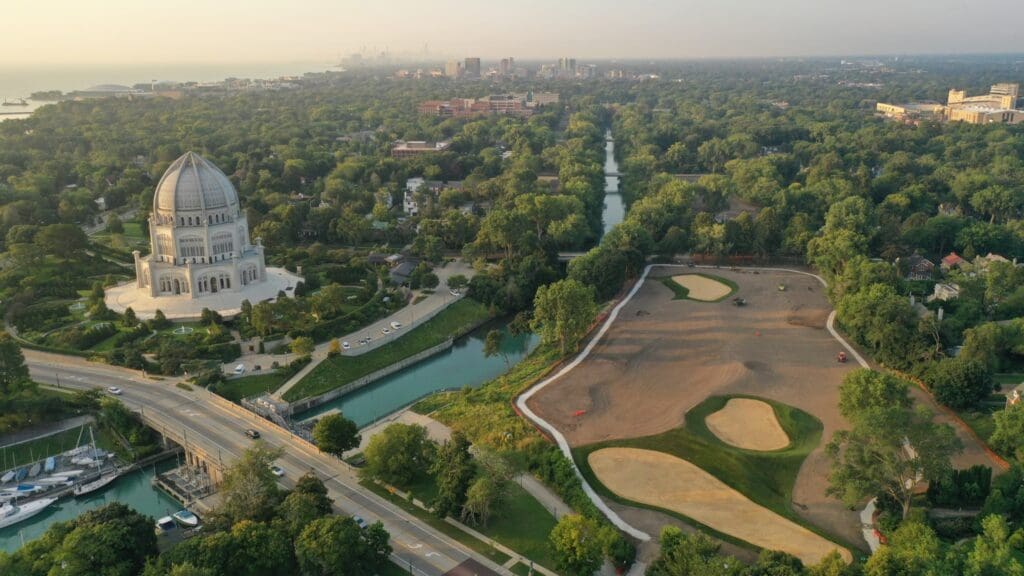
This project revitalized a beloved 104-year-old public course along the North Shore Canal in Evanston and Wilmette, Illinois. We designed wetland and buffer zones within the playing area to minimize permitting complexity and protect sensitive habitats and collaborated with the golf course architect to expand wetland zones and integrate native species, supporting the Canal Shores Eco Master Plan and reinforcing the course’s certification as an Audubon Cooperative Sanctuary.
Maple Meadows Golf Preserve

This 18-hole renovation updated aging infrastructure and modified golf holes to enhance the playing experience, speed up pace of play, and improve the spacing and buffer between golf areas and the adjacent residential community. Owned by the DuPage County Forest Preserve District, the renovation more closely aligns with the District’s mission to provide native habitat, natural areas, and enhanced environmental conditions.
These projects make an impact on the environment and our team members as well.

“I love golf. I grew up as a caddy and even got a college scholarship for caddying. Bringing my engineering expertise to something that I just really adore is a lot of fun, especially for public courses where other people can have access to that stuff too.”
Andrew Regnery, P.E., Floodplain & Stormwater Project Manager
Floodplain & Stormwater Services
We implement proven sustainability techniques for integrated resource management, helping you reduce resource consumption, promote climate resilience, and preserve environments for years to come. Connect with our team to learn more.