
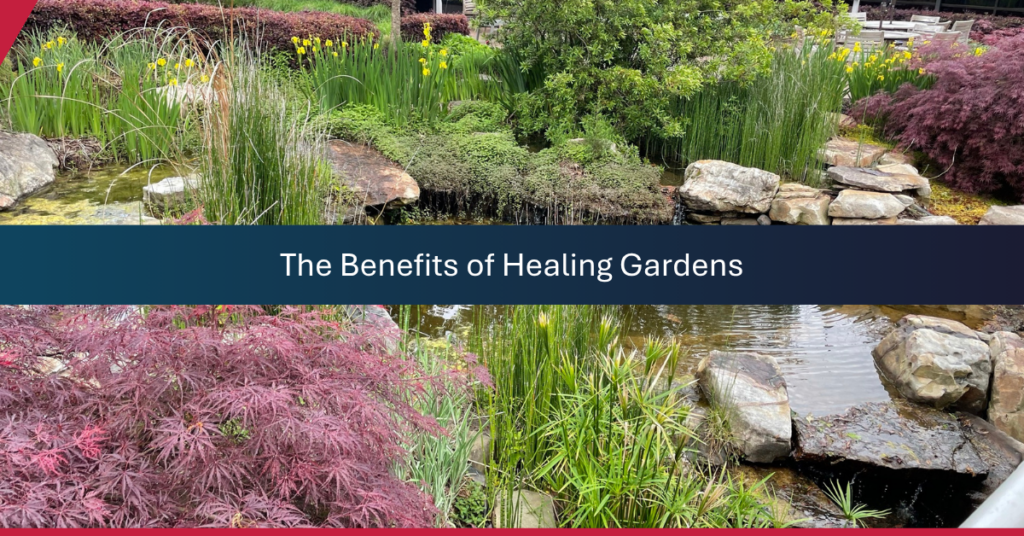
Gardens are inherently calming spaces, but healing gardens take it one step further with intentional design elements known to soothe and aid recovery. Learn more about how our Landscape Architects use the restorative power of nature to create therapeutic green spaces.
What is a healing garden?
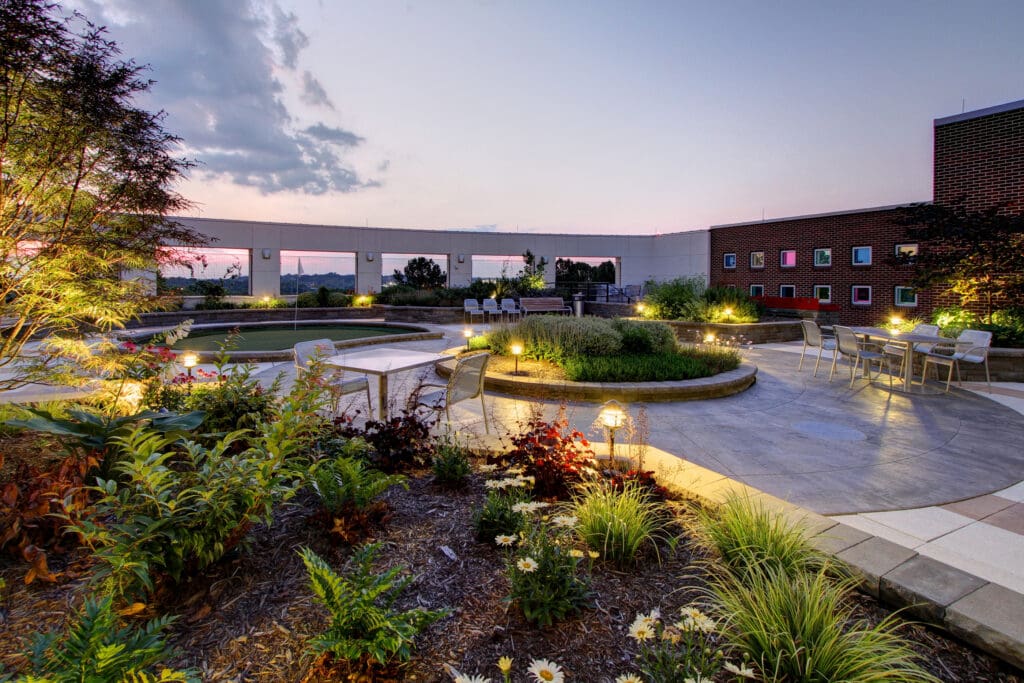
A healing garden is a green space designed to reduce stress, support recovery, and provide a calming respite for patients and their families. Often found in healthcare facilities, these meaningful outdoor areas incorporate specific sights, sounds, and scents to encourage visitor relaxation. Visiting a hospital or rehabilitation center is often an emotionally taxing experience; healing gardens offer an opportunity to step away, take a breath, and reflect on the road to recovery.
Benefits include:
- Reduced mental fatigue
- Lowered anxiety, tension, and blood pressure
- Improved mental health
- Increased physical activity and recovery
What is in a healing garden?
Healing gardens are meticulously designed to soothe our bodies and minds through tried-and-true curative properties. Thoughtful organic and hardscape materials purposefully speak to our senses in one cohesive space.
Plants play a pivotal role in effective healing gardens. As natural mood boosters, their beauty and scent subconsciously affect our physical, psychological, and emotional health. Pleasant smelling plants such as lavender, rosemary, and sage are often chosen for their aromatherapy benefits, while flowers such as daises and sunflowers invite color and joy.
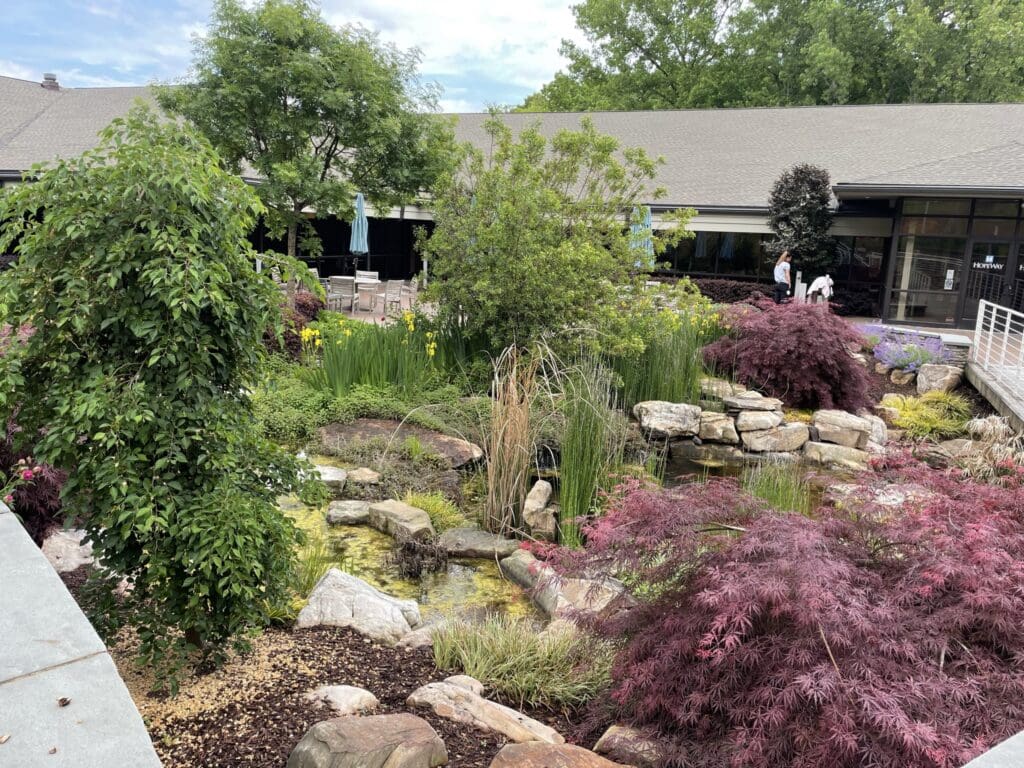

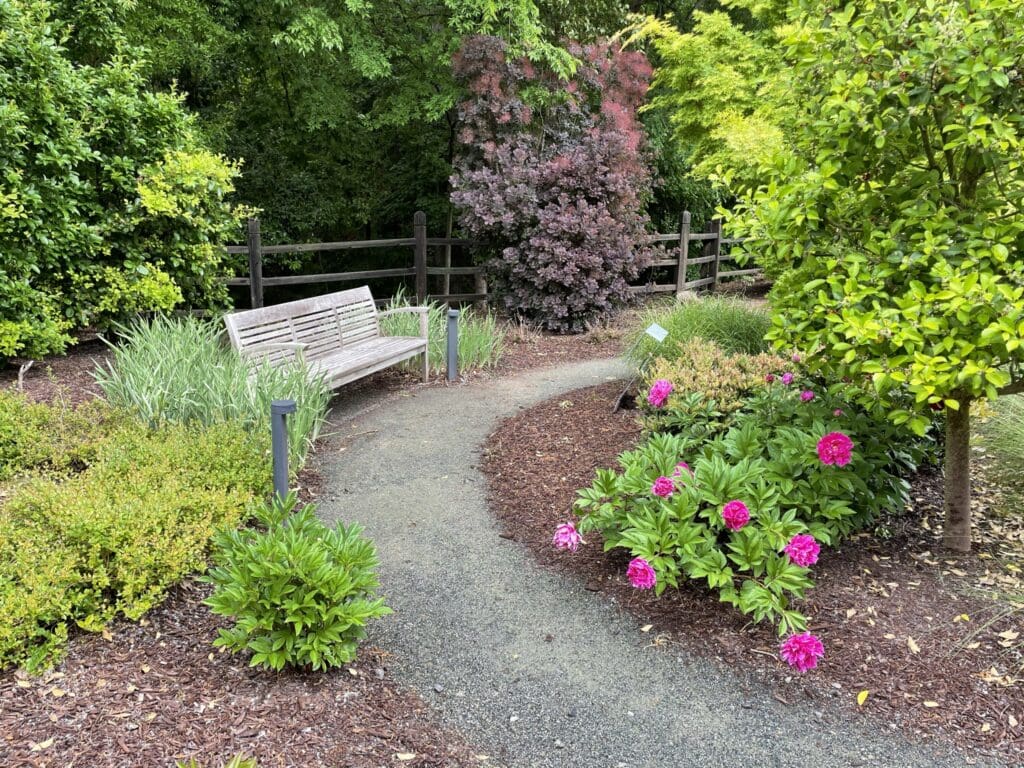
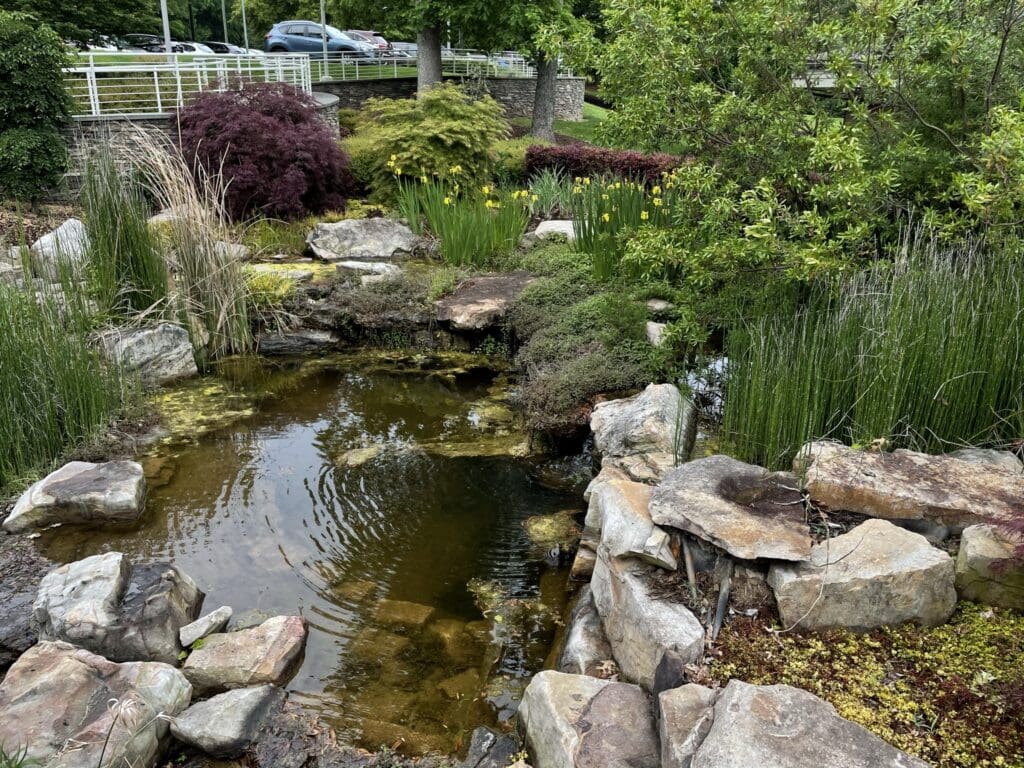
Additional visual elements such as fountains, sculptures, murals, or other public art exhibits can greatly impact these peaceful settings. Benches are also often included for moments of rest and quiet companionship.
Sound is another important component for healing gardens. In addition to the gentle rustle of plants swaying in the breeze, speaker systems are often tucked throughout the area to play soothing nature sounds or light instrumental music.
What does a healing garden look like?
Healing gardens can take on many forms depending on the available space and needs of the facility. The goal is to provide a break from the sterile healthcare environment, so any space outside the facility’s walls can be transformed into a therapeutic oasis.
Ideas for healing gardens include:
- Cozy courtyards tucked away from the hustle and bustle.
- Rooftop gardens with expansive views of landscape and sky.
- Winding trails that invite visitors on a walking mediation.
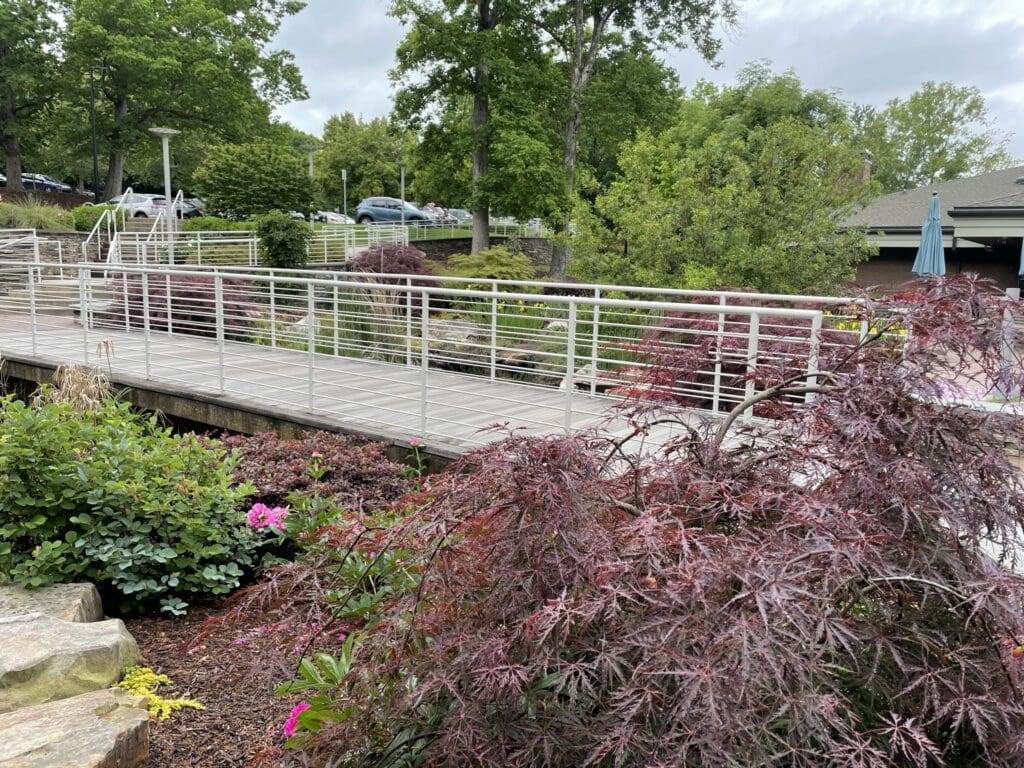
Wayfinding paths can be invaluable tools for patients with memory loss. By using intentional path markers, these walkways can encourage exploration without fear of getting confused or turned around.
How to create a healing garden
Designing a healing garden is about more than what to plant: these carefully planned spaces must serve the unique needs of your healthcare facility.
To get started with a healing garden:
- Define your goals: Consider the circumstances of your average patient. Those recovering from a major surgery will have different needs than a memory-loss patient.
- Identify a space: Healing gardens can be incorporated into a wide range of outdoor areas.
- Work with an experienced Landscape Architect: Partnering with a professional will ensure the ideal balance of restorative elements for your patients. Landscape Architects are trained to find maximum potential in outdoor environments and will empower you to create the best environment for your facility.
Healthcare Healing Gardens with V3
Our team has extensive experience in creating healing gardens tailored to unique patient needs. By working across in-house specialties such as landscape architecture, planning, ecology, and more, we design holistic environments that support recovery and rejuvenation. Connect with our team to learn more.