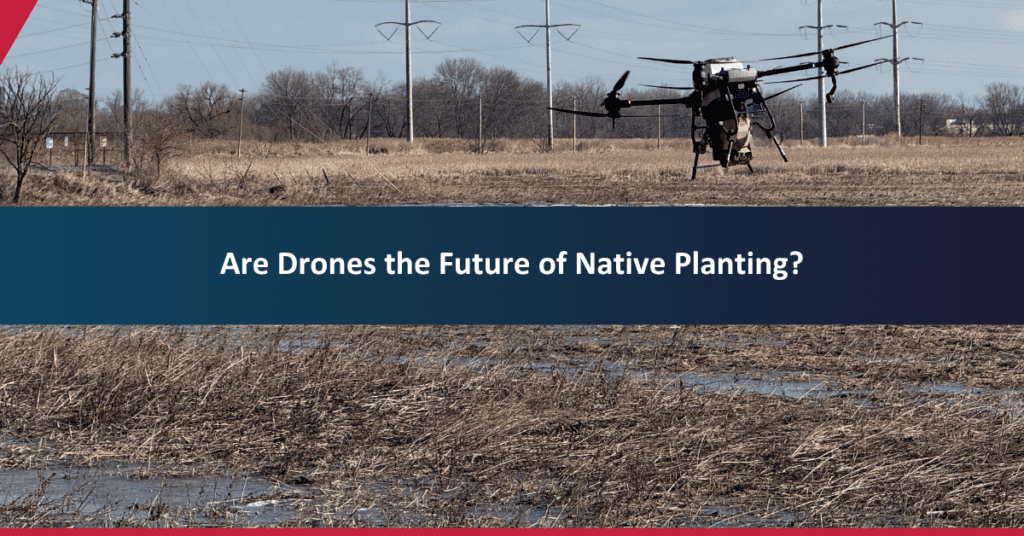
Drones are commonly used for survey and photography, but can they spread native seed? If they’re part of V3’s fleet, they can! Our team recently unveiled one of the industry’s first drone seeders, with in-house developed parts designed specifically for native seed. Learn how Ecological Restoration Leader Brad Millis combined his ecological expertise and technological prowess into a cutting-edge invention that could change the game for establishing native environments.
The next step in native management
Creating thriving natural spaces is a labor-intensive process. When left alone, wild environments can get overgrown with invasive species that choke out the native plants needed to support the local ecosystem. Removing these detrimental plants requires boots-on-the-ground manual labor, with teams spraying, cutting, and pulling for weeks on end.
Last summer, our ecological restoration team began using a sprayer drone to more efficiently treat large and difficult-to-traverse terrain. From the sky, this drone can access areas that ATVs cannot, allowing for more comprehensive coverage and effective herbicide application.
But removing invasive species is only the first step in establishing native environments. Once the invasive species are gone, native plants or seed must take their place, or else the harmful vegetation will return. Getting to those hard-to-reach marshlands or shorelines for planting is equally, if not more, challenging, putting unnecessary strain on field teams.
To Brad Millis, there had to be a better way.
Addressing a need for native seed
Brad realized that using our drones to both spray and seed could reduce physical labor while expanding the team’s ability to reach previously untenable sites. After experimenting with the miniscule selection of manufactured drone attachments, he soon found the available designs would not support the light, fluffy quality of native seed. Teammate and Field Ecologist Adam Rea suggested experimenting with Truax-made planting equipment.
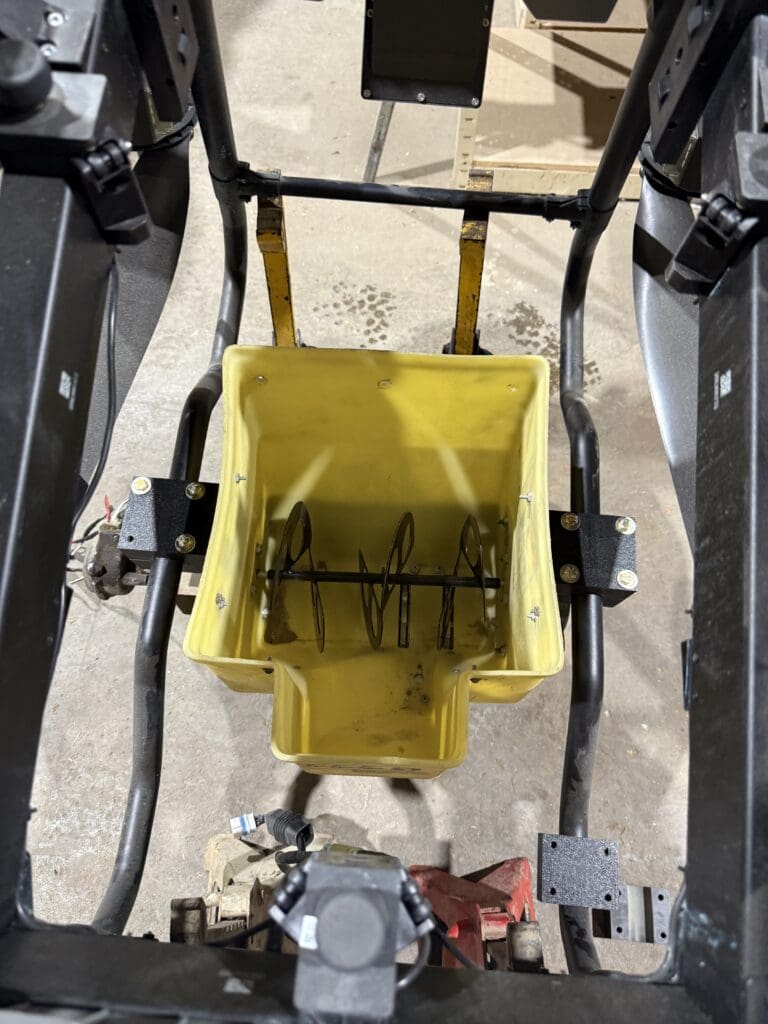
“There aren’t many tools or pieces of equipment that are truly designed for what we do in the restoration world. Normally we’re using either agricultural or landscape equipment. We tried some different modifications and whatnot with the stock seeder and it just wasn’t working. So instead, I started tinkering with a Truax seeder to see if we could mount it to our drone.”
Brad Millis, Ecological Restoration Leader
This kicked off a multi-month project to create a custom native seeder attachment. Having worked in ecological restoration for nearly 20 years, Brad had a firm grasp on how to successfully spread this specific seed type. He applied his personal electronics and coding hobbies to design the ideal drone component and used 3D printed materials to mount the seeder to the sprayer done.
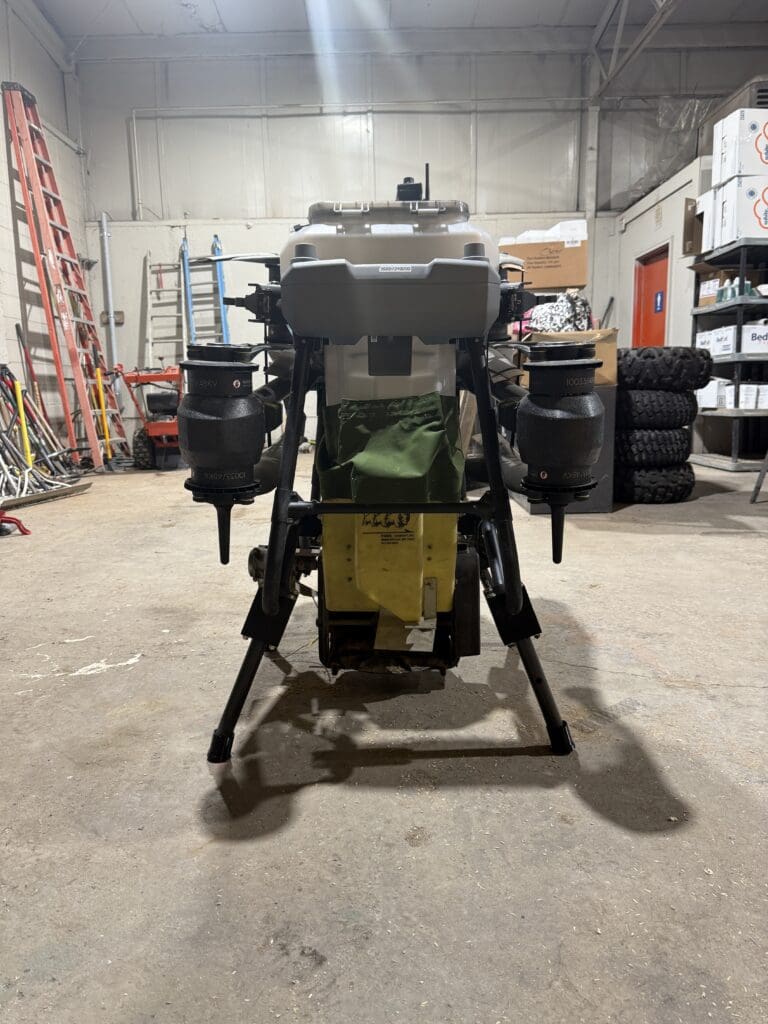
Whenever he got stuck, Brad turned to his teammates for support, including Survey Technology Manager Grant Van Bortel, Chief Technology & Innovation Officer Greg Wolterstorff, and Senior Vice President Stuart Dykstra’s son.
After several field tests and troubleshooting sessions, Brad was confident his invention was ready to take on an actual planting.
“When you’re taking on something new, you don’t know what you don’t know. So we researched it and had every reason to believe that it would work, but seeing is believing, you know? Seeing the drone take off and land without any issues was very exciting.”
Brad and his team used the drone seeder to successfully complete several planting projects, paving the way for a more efficient solution for clients and field workers alike.
“Spraying herbicide and then seeding is a challenging experience for anybody. We cover hundreds of acres in all weather conditions. ATVs can get stuck, crews are dragging heavy equipment: it’s hard. So I’m hoping this option will help boost morale while also allowing more clients to treat the areas they need.”
The sky’s the limit for V3’s technology
Embracing what’s possible is a way of life at V3. Our internal technology initiative—Technovate—empowers our team to explore the latest industry advancements and implement new ideas to make our work more effective and efficient.
Brad’s drone seeder is one of the first—if not the first—in the market. This breakthrough has joined V3’s official offerings of innovative client services.
“If I could just prototype and develop stuff all day long, I would be doing it 16 hours a day. I love it. The fun part for me was bringing something I’ve been doing outside of work and seeing it really come to fruition at V3.”
Connect with our team to learn more.