
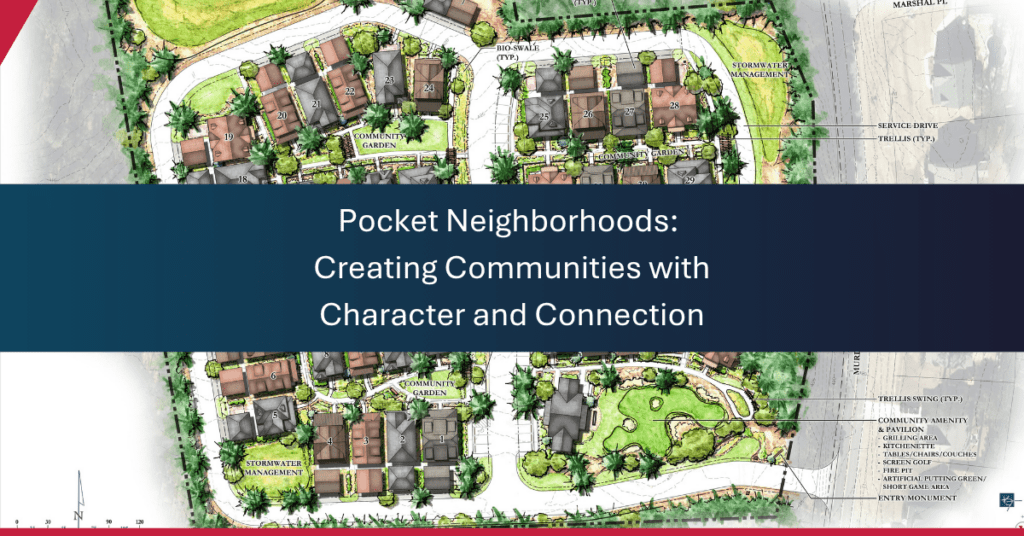
Imagine living in a tight-knit community filled with walkable paths, charming homes, and beautiful green spaces where people enjoy the outdoors together. Welcome to a pocket neighborhood, where social connection is woven into every architectural and natural feature. Learn more about this unique living environment and how it brings people together through intentional design.

What are pocket neighborhoods?
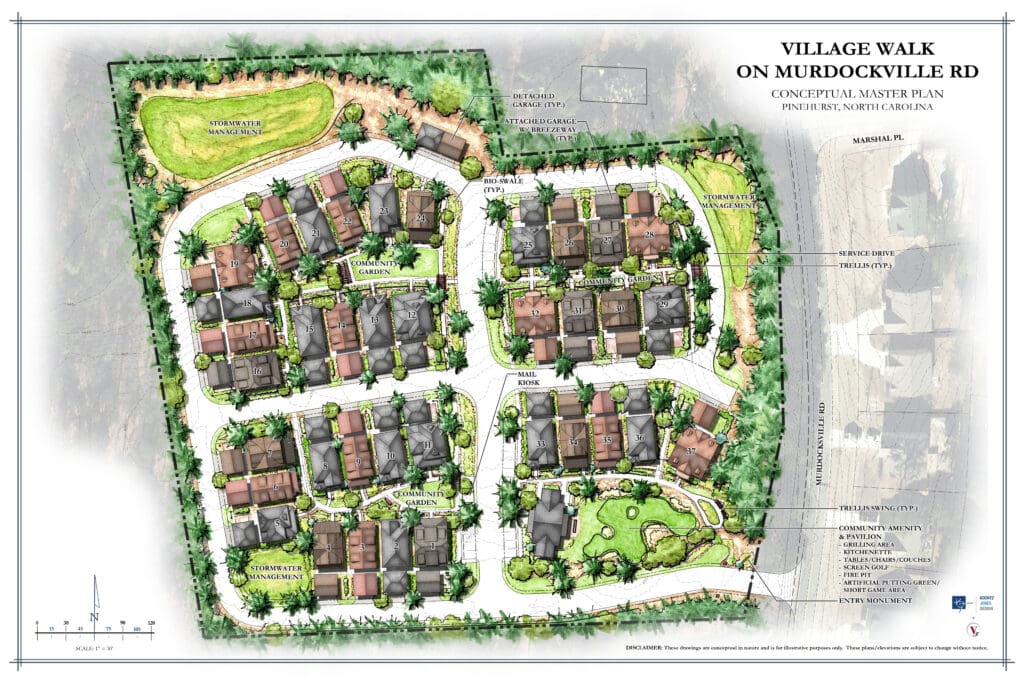
Pocket neighborhoods are small groupings of homes that load from the back and share a common green space in front. Designed to foster socialization and connection, these small-scale communities create a more intimate living experience where everyone knows their neighbors.
Also referred to as cottage courts, these mini master planned communities have considerably fewer homes than the typical neighborhood, averaging anywhere from eight to forty homes (compared to the 50-200 suburban average). They frequently incorporate central-facing porches, pedestrian-friendly paths, and communal gardens that encourage organic opportunities for people to meet, play, and enjoy a more intentional living environment.
Benefits of pocket neighborhoods
Pocket neighborhoods are not only about creating close-knit relationships; their unique design results in many long-lasting benefits.
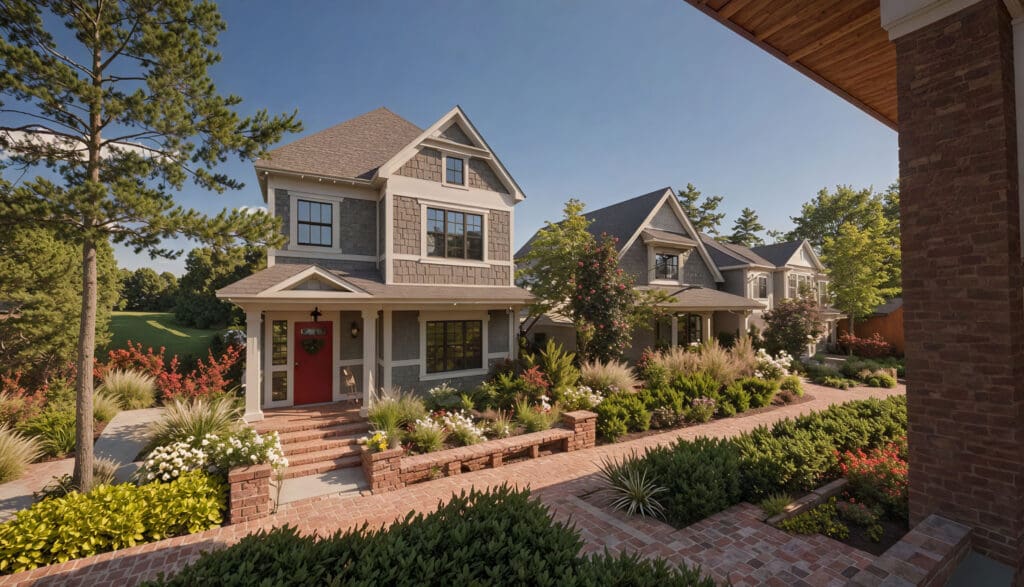
- High-character homes: Because pocket neighborhoods homes are physically closer together, architectural appeal is a must. Aesthetic details such as welcoming front porches, trellises, picket fences, gates, hedges, and more help layer in the visual interest needed when all houses face each other.
- Shared amenities: Pocket neighborhoods often incorporate parks, playgrounds, trails, pools, and even a clubhouse or outdoor kitchen to host barbeques, parties, and other events.
- Passive recreation: Rather than being separated into separate backyards, the communal green space in front invites neighbors to enjoy the outdoors together.
- Integrated connectivity: Pathways weaving through the neighborhood and extending to surrounding communities and developments make it easy to travel by foot or bicycle.
- Increased sustainability: Smaller environmental footprints require less energy consumption. Shared green spaces mean less water and fertilizer, while the walkability cuts down on fuel demands.
- Little to no maintenance: Shared green spaces mean less yardwork. Most landscaped areas in pocket neighborhoods have Homeowner’s Associations to take care of the surroundings.
- High resale value: Pocket neighborhoods only have so many homes; when one becomes available, it often demands a more than competitive price.

How to develop a pocket neighborhood
Developing a pocket neighborhood isn’t just making a smaller subdivision: it’s about creating an intentional environment built on character and connection. Getting all the details right is key in helping people feel open to living in such close quarters.
Developers must consider:
Zoning: One of the biggest potential hurdles in developing a pocket neighborhood is zoning. Because this type of community is so unique, many areas aren’t zoned for their construction and require a nuanced entitlement process. Working with an experienced team that can help you navigate local rules and ordinances is essential for moving forward.
Architecture: Due to their layout, pocket neighborhoods are all curb appeal. Every house must have its own charm and custom architecture. In addition to high aesthetics, these details must also incorporate privacy so that close-proximity neighbors aren’t directly looking through each other’s windows.
Landscaping: A beautiful, inviting shared green space can make or break a pocket neighborhood. Only an experienced landscape architect can successfully balance the sense of scale needed to make a small area feel like a standout feature.

Create a pocket neighborhood with V3
Our thoughtful, detail-oriented team of planners, landscape architects, civil engineers, and other specialists create master planned communities that are rooted in lifestyle, connection, and a sense of place. We can help you navigate zoning challenges and develop an inviting, cohesive environment that welcomes residents with open arms. Connect with our team to learn more.